
How to buy Bitcoin safely is a question many potential investors ponder as they navigate the ever-evolving world of cryptocurrency. With Bitcoin’s increasing popularity, understanding how to securely purchase and store this digital currency has become essential for anyone looking to enter the market.
In this guide, we will explore the fundamental aspects of Bitcoin, including its operation as a digital currency, the factors influencing its value, and the safest methods to purchase it. Whether you are a seasoned investor or a curious newcomer, this will equip you with the knowledge to make informed decisions.
Understanding Bitcoin and Its Value
Bitcoin is a revolutionary digital currency that operates on a decentralized network, allowing for peer-to-peer transactions without the need for intermediaries like banks. Created in 2009 by an anonymous entity known as Satoshi Nakamoto, Bitcoin introduced the concept of blockchain technology, which securely records all transactions on a public ledger. This transparency and lack of central control have garnered significant interest from investors and tech enthusiasts alike.The value of Bitcoin is influenced by a variety of factors, including market demand, regulatory developments, technological advancements, and macroeconomic trends.
As more people embrace cryptocurrency, demand increases, which often drives up the price. Conversely, negative news, such as regulatory crackdowns or security breaches, can lead to sharp declines. For instance, significant price fluctuations are often seen during major events, such as institutional adoption or government regulations being introduced.
Factors Influencing Bitcoin’s Price
Several key elements contribute to the valuation of Bitcoin, making it essential for potential investors to understand these dynamics. These factors include:
- Supply and Demand: Bitcoin’s total supply is capped at 21 million coins, creating scarcity that can drive prices up as demand increases.
- Market Sentiment: Public perception and media coverage can significantly influence investment behavior, leading to volatility.
- Regulatory Environment: Changes in government policies regarding cryptocurrency can either positively or negatively impact Bitcoin’s price.
- Technological Developments: Innovations such as improvements to the Bitcoin network, scalability solutions, and security enhancements can boost investor confidence.
- Macroeconomic Factors: Global economic conditions, inflation, and currency devaluation can lead investors to see Bitcoin as a hedge against traditional financial systems.
Benefits and Risks of Investing in Bitcoin
Investing in Bitcoin presents several advantages compared to traditional currencies, along with inherent risks that potential investors should consider. The benefits include:
- High Potential Returns: Bitcoin has historically provided significant returns to early adopters, outperforming many traditional assets.
- Decentralization: As a decentralized currency, Bitcoin is not controlled by any government or financial institution, offering users greater financial freedom.
- Inflation Hedge: Bitcoin’s limited supply makes it an attractive option for investors looking to hedge against inflation and currency devaluation.
- Accessibility: Bitcoin can be accessed and traded by anyone with an internet connection, promoting financial inclusion.
However, investing in Bitcoin also comes with risks:
- Price Volatility: Bitcoin’s price can be extremely volatile, leading to significant financial losses if not managed carefully.
- Regulatory Risk: Changes in legislation can affect the viability and legality of Bitcoin investments.
- Security Concerns: While the Bitcoin network is secure, users are still at risk of hacks and scams, particularly if proper security measures are not taken.
- Market Manipulation: The relatively low market capitalization of Bitcoin compared to traditional assets makes it susceptible to price manipulation by large holders.
As with any investment, it is crucial for individuals to conduct thorough research and understand the risks associated with Bitcoin before investing.
Safe Methods to Purchase Bitcoin
Buying Bitcoin safely is essential for ensuring both your investment’s security and your personal information’s privacy. With the rise of cryptocurrency, numerous methods exist for purchasing Bitcoin, but not all are created equal. This section delves into the steps for creating a secure digital wallet, reputable exchanges for purchasing Bitcoin, and best practices for securing personal information during transactions.
Creating a Secure Digital Wallet
A digital wallet is crucial for storing your Bitcoin and ensuring its safety. Choosing the right type of wallet and setting it up properly can significantly reduce the risks of theft or loss.
1. Select the Type of Wallet
Hardware Wallets
These are physical devices that store your Bitcoin offline, providing robust security.
Software Wallets
Available as mobile or desktop applications, these wallets are convenient but may be more vulnerable to online threats.
Paper Wallets
A physical printout of your Bitcoin address and private key, this method is highly secure against online risks but requires careful handling to avoid physical loss.
2. Download the Wallet
For software wallets, download them from official websites or reputable app stores. Ensure you’re using the latest version to benefit from security updates.
3. Set Up the Wallet
Follow the instructions to create a new wallet. This typically includes generating a secure password and backup phrase.
4. Backup Your Wallet
Create backups of your wallet’s private keys and recovery phrase. Store these backups in secure locations, such as a safe or a safety deposit box, to ensure you can recover your funds if needed.
5. Enable Two-Factor Authentication (2FA)
If supported, activate 2FA to add an extra layer of security to your wallet.
Buying Bitcoin Through Reputable Exchanges
Purchasing Bitcoin through exchanges is one of the most common methods. Here are the steps involved in selecting a reputable exchange and ensuring a secure transaction.
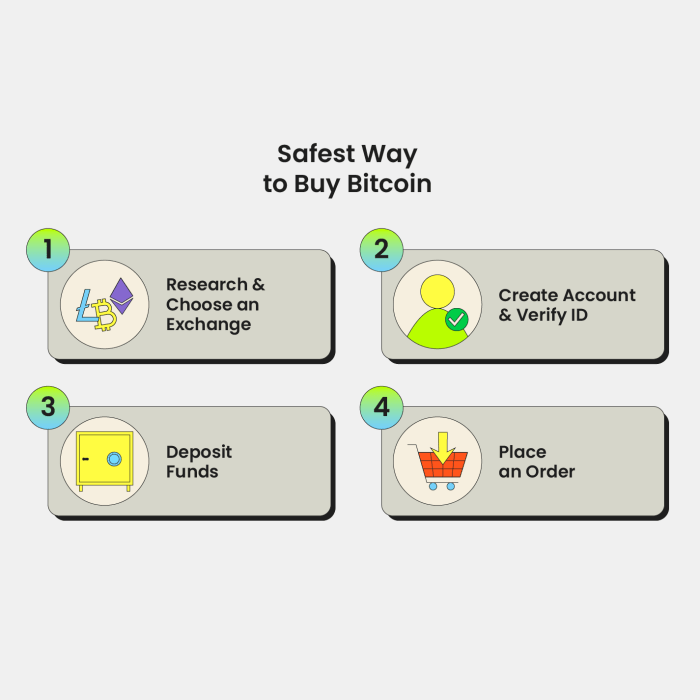
1. Choose a Reputable Exchange
Look for exchanges with a transparent reputation, security features, and a user-friendly interface. Popular options include Coinbase, Binance, and Kraken.
2. Registration Process
Visit the exchange’s website and click on the registration link.
Fill in the required personal information, such as your name, email address, and phone number.
Create a strong password to protect your account.
3. Verification Process
To comply with regulations, most exchanges will require identity verification. Be prepared to submit identification documents, such as a driver’s license or passport. Some exchanges may also request proof of address, like a utility bill.
4. Secure Your Account
After registration, enable 2FA on your exchange account to protect against unauthorized access.
5. Purchase Bitcoin
Once your account is verified, navigate to the trading section of the exchange, select Bitcoin, and enter the amount you wish to purchase. Confirm the transaction and follow the prompts to complete the purchase.
Best Practices for Securing Personal Information and Funds
When conducting transactions, it’s essential to implement best practices to protect your personal information and funds.
Use Strong Passwords
Create unique passwords for your wallet and exchange accounts, using a mix of letters, numbers, and symbols.
Monitor Your Accounts
Regularly check your wallet and exchange accounts for any suspicious activity. Immediate action can prevent potential losses.
Be Wary of Scams
Always verify sources before clicking links or providing personal information. Phishing scams are common in the cryptocurrency space.
Conduct Transactions Over Secure Networks
Avoid making transactions on public Wi-Fi networks. Instead, use a secure and private internet connection.
Keep Software Updated
Ensure your wallet, exchange app, and any related software are updated to protect against vulnerabilities.
“Security is a process, not a product.”
Bruce Schneier
Bitcoin Currencies and Their Comparison
The world of cryptocurrencies extends far beyond Bitcoin, with various digital currencies each offering unique features and capabilities. Understanding the differences between Bitcoin and other prominent cryptocurrencies, such as Ethereum, Litecoin, and Ripple, can aid investors in making informed decisions. This comparison not only highlights the strengths and weaknesses of these currencies but also emphasizes the importance of diversification in a cryptocurrency investment portfolio.
Comparison of Major Cryptocurrencies
When examining cryptocurrencies, it’s important to consider key attributes including transaction speed, blockchain technology, and use cases. Each cryptocurrency serves different purposes in the financial ecosystem, which can significantly influence their market performance.Below is a comparison chart that Artikels the features, transaction speeds, and use cases of Bitcoin, Ethereum, Litecoin, and Ripple:
| Cryptocurrency | Transaction Speed | Blockchain Technology | Use Cases |
|---|---|---|---|
| Bitcoin | 10 minutes | Proof of Work | Digital currency, store of value |
| Ethereum | 15 seconds | Proof of Work (transitioning to Proof of Stake) | Smart contracts, decentralized applications |
| Litecoin | 2.5 minutes | Proof of Work | Peer-to-peer transactions |
| Ripple | 4 seconds | Consensus Protocol | International money transfers, banking |
The speed of transactions varies significantly among these cryptocurrencies, with Ripple leading the pack, making it more suitable for banking and international transfers. Bitcoin, while the most recognized, has slower transaction times, which can be a downside when speed is essential.Bitcoin’s value primarily lies in its status as a digital gold and store of value, whereas Ethereum, with its smart contract functionality, opens avenues for decentralized applications and technological innovation.
Litecoin, often referred to as the silver to Bitcoin’s gold, provides quicker transaction times, making it favorable for everyday transactions.
“Diversifying cryptocurrency investments beyond Bitcoin can mitigate risks and enhance potential returns, as different cryptocurrencies can perform variably under various market conditions.”
Investors should consider the advantages of diversifying their portfolios to include a range of cryptocurrencies. Each digital asset has its own strengths and potential vulnerabilities. For example, while Bitcoin remains the leader in market capitalization, altcoins like Ethereum and Ripple have carved out significant niches that could yield considerable return opportunities.In summary, understanding the differences among cryptocurrencies allows investors to make well-informed choices.
By exploring various assets within the cryptocurrency landscape, investors can better position themselves to capitalize on the evolving nature of digital currency markets.
Ending Remarks
In conclusion, buying Bitcoin safely involves a blend of understanding the cryptocurrency landscape and taking practical steps to secure your investments. By following the Artikeld methods and best practices, you can confidently navigate the world of Bitcoin and make secure purchases that align with your financial goals.
FAQ Resource
What is the best way to buy Bitcoin safely?
The safest way to buy Bitcoin is through a reputable exchange that requires identity verification and offers strong security measures.
Can I buy Bitcoin anonymously?
While some platforms allow for anonymous purchases, they often come with higher risks; it’s generally safer to go through exchanges that verify identities.
What types of wallets are best for storing Bitcoin?
Hardware wallets are considered the safest for long-term storage, while software wallets offer convenience for everyday transactions.
How do I know if an exchange is reputable?
Look for exchanges that have a strong reputation, positive reviews, and compliance with regulations in your jurisdiction.
Is it safe to buy Bitcoin with a credit card?
Buying Bitcoin with a credit card can be safe if you use reputable exchanges, but be aware of potential fees and fraud risks.


